KRISTO RODZEVSKI
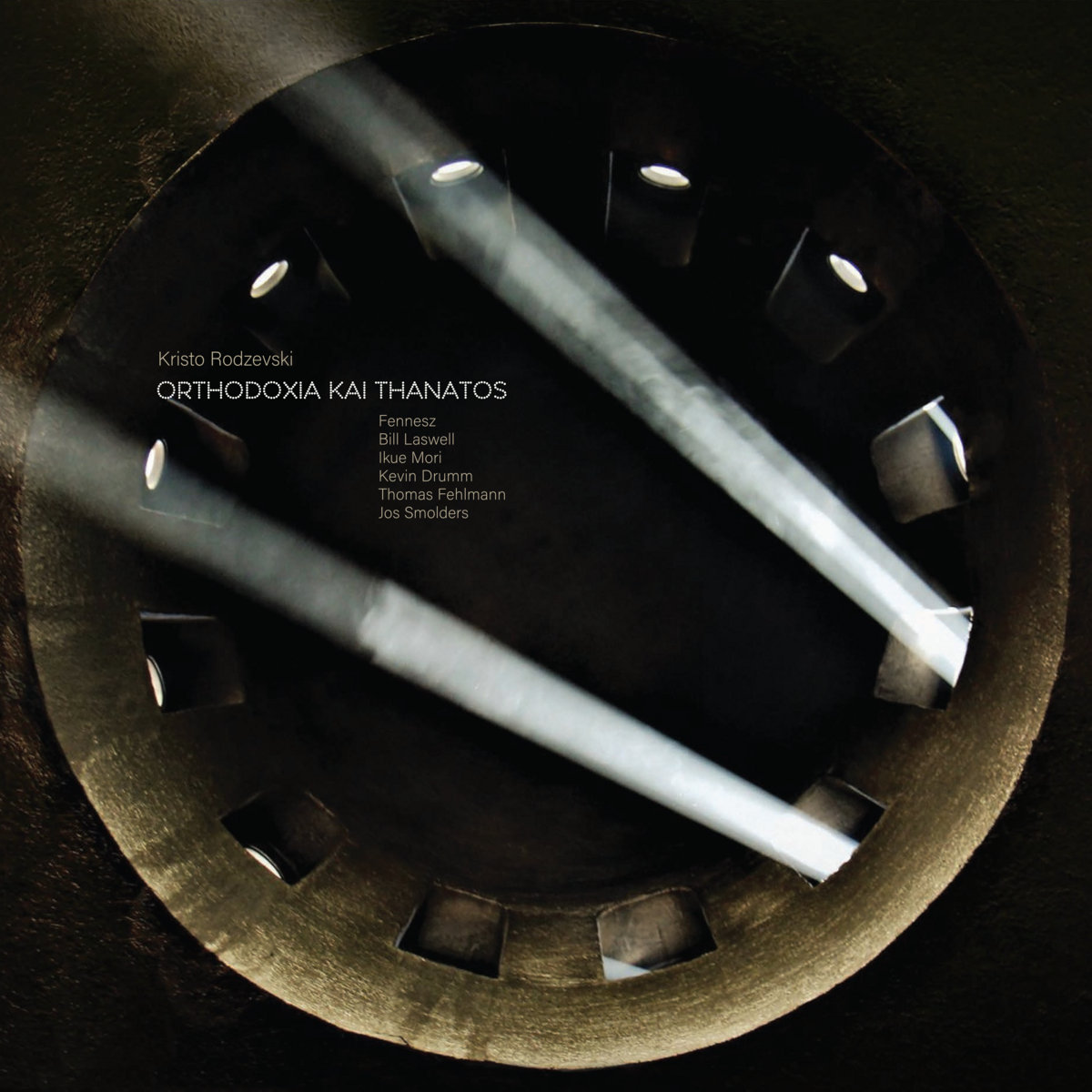
 ORTHODOXIA
  1/  Abun D`Bashmayo                            (Traditional)                 2.41
  2/  Exomologisthe                              (Traditional)                 4.52
  3/  Asomen                                     (Traditional)                 4.07
  4/  Bogorodice Devo                            (Traditional)                 2.48
  5/  H Efxi                                     (Traditional)                 3.06
  6/  Coptic Hymn                                (Traditional)                 3.08
  7/  Hristos Anesti                             (Traditional)                 2.15
  8/  Agni Parthene                              (Traditional)                 4.53
  9/  Mes Tis Erimias Ta Kalli                   (Traditional)                 3.49
  10/ Svetli Se Nov Erusalime                    (Traditional)                 3.18
  11/ Axion Estin                                (Traditional)                 2.21
  12/ Trisaigon                                  (Traditional)                 3.44
  13/ Psalm 50                                   (Traditional)                 4.45

 THANATOS
  14/ Maaloula (with Fennesz)                    (Traditional,Fennesz)         3.16
  15/ Hamatoura (with Fennesz)                   (Traditional,Fennesz)         4.56
  16/ Lalibela (with Bill Laswell)               (Traditional,Laswell)         4.11
  17/ Zrze (with Kevin Drumm)                    (Traditional,Drumm)           2.47
  18/ Simonopetra (with Ikue Mori)               (Traditional,Mori)            3.07
  19/ Meteora (with Thomas Fehlmann)             (Traditional,Fehlmann)        2.40
  20/ Kerkyra (with Bill Laswell)                (Traditional,Laswell)         2.39
  21/ Hozoviotissa (with Jos Smolders)           (Traditional,Smolders)        4.53
  22/ Mount Sinai (with Ikue Mori)               (Traditional,Mori)            4.00
  23/ Bigorski (with Kevin Drumm)                (Traditional,Drumm)           3.19
  24/ Mokattam (with Kevin Drumm)                (Traditional,Drumm)           3.09
  25/ Sumela (with Thomas Fehlmann)              (Traditional,Fehlmann)        2.52
  26/ Katskhi Pillar (with Jos Smolders)         (Traditional,Smolders)        4.50

          Vocals recorded, mixed, and digitally mastered by Ben B. Goss in New York, NY
          Tracks 14 and 15 mixed by Fennesz in Vienna, Austria
          Tracks 16 and 20 mixed by John Hughes in Chicago, IL
          Tracks 18 and 22 mixed by Ikue Mori in New York, NY
          Tracks 17,23 and 24 mixed by Kevin Drumm in Chicago, IL
          Tracks 19 and 25 Thomas Fehlmann in Beriln, Germany
          Tracks 21 and 26 mixed by Jos Smolders in Tilburg, The Netherlands
          Vocals recorded, mixed, and digitally mastered by Ben B. Goss in New York, NY
          LP mastering by Jos Smolders at EARLabs Studio in Tilburg, The Netherlands
Kristo Rodzevski: vocals; Fennesz: electronics (14,15); Bill Laswell: bass (16,20), electronics (16,20); Kevin Drumm: electronics (17,23,24); Ikue Mori: electronics (18,22);
Thomas Fehlmann: electonics (19,25); Jos Smolders: electronics (21,26).Arranged and produced by Kristo Rodzevski (BMI)
2025 - Port of Entry 3901 Records (2xVinyl)
Byzantine chant, at the core of this album, is one of the oldest continuously practiced musical traditions in Europe. Emerging from the early Christian centuries of the Eastern Roman Empire, it was shaped not for performance, but for prayer. Its monophonic lines, modal systems (the echoi), and absence of harmonic progression are meant to suspend time rather than move it forward. The chant is not expressive in a Romantic sense; it is devotional, austere, and inward-looking. Rodzevski approaches this tradition with a rare combination of reverence and courage, fully aware that such material cannot be "interpreted" casually without losing its gravity.
What makes Orthodoxia Kai Thanatos particularly striking is its linguistic and geographical breadth. The album moves through Greek, Church Slavonic, Macedonian, Arabic, Aramaic, Coptic, and Ethiopian traditions, tracing a vast spiritual map of Eastern Christianity and its neighboring cultures. These are not museum pieces. Rodzevski treats them as living texts—fragile, resonant, and deeply human. His voice is restrained, almost self-effacing, allowing the chants to speak through him rather than being shaped around his personality.
The title, translating roughly as "Orthodoxy and Death," is not morbid, but profoundly theological. In Orthodox Christianity, death is not an end point but a passage, a threshold. This understanding permeates the album. Silence is as important as sound; decay and distortion coexist with clarity. The electronic treatments—contributed by figures such as Bill Laswell, Fennesz, Ikue Mori, Kevin Drumm, and others—do not modernize the chants so much as place them in an unstable present. These textures feel like erosion, like time itself brushing against the sacred.
What is most moving is the album’s refusal to dramatize. There are no crescendos engineered for effect, no emotional shortcuts. Instead, the record unfolds slowly, demanding patience and attentiveness. In doing so, it mirrors the function of chant itself: repetition as transformation, endurance as meaning. Listening becomes a form of quiet participation.
For those familiar with Rodzevski's previous work, Orthodoxia Kai Thanatos may come as a surprise. Yet, on a deeper level, it feels inevitable. His longstanding interest in voice as an instrument, in liminal emotional spaces, and in cultural hybridity finds its most distilled expression here. This is not an album that seeks broad appeal, but it offers something rarer: sincerity without spectacle.
Nenad Georgievski (courtesy of Nenad's Substack)