PAINKILLER
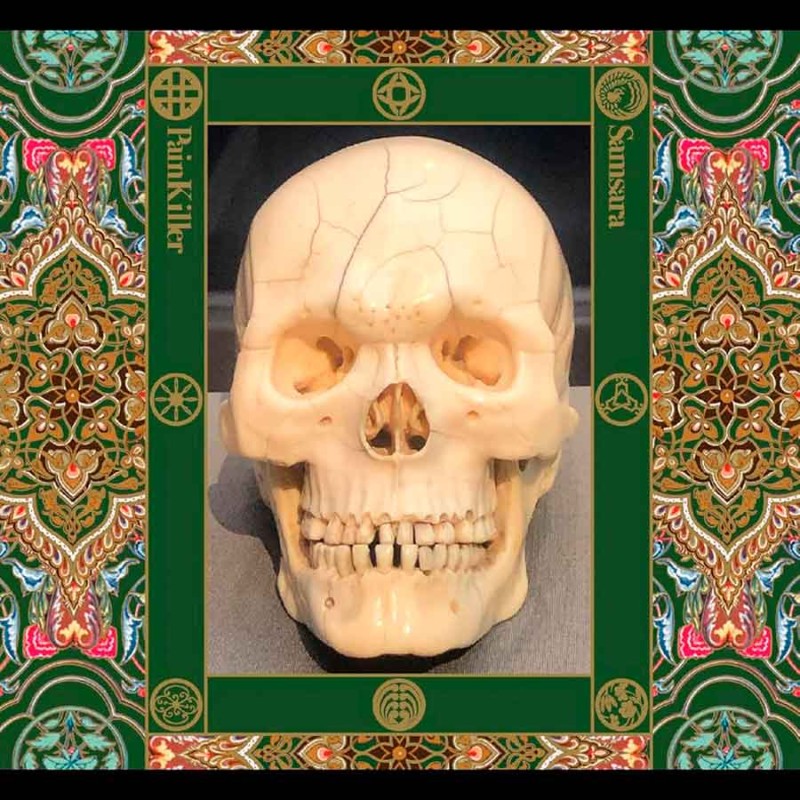
  1/  Samsara I                                  (Zorn,Laswell,Harris)         6.08
  2/  Samsara II                                 (Zorn,Laswell,Harris)         6.29
  3/  Samsara III                                (Zorn,Laswell,Harris)         5.24
  4/  Samsara IV                                 (Zorn,Laswell,Harris)         5.15
  5/  Samsara V                                  (Zorn,Laswell,Harris)         5.15
  6/  Samsara VI                                 (Zorn,Laswell,Harris)         4.57
  7/  Samsara VII                                (Zorn,Laswell,Harris)         4.59
  8/  Samsara VIII                               (Zorn,Laswell,Harris)         2.28

          Drums recorded February 2024 at The Lad's Old Room, Birmingham, England
          Sax and bass recorded March 2024 at Orange Studio, East Orange, New Jersey
          Engineer at The Lad's Old Room: Mick Harris
          Engineer at Orange: James Dellatacoma
          Mixed April 2024 by James Dellatacoma
          Mastered by Scott Hull
          Design by Chippy Hueng-Heung Chin via Tomoyo T.L. (Karath-Razar)
John Zorn: alto sax; Bill Laswell: bass; Mick Harris: beats/electronics.
2024 - Tzadik (USA), TZ 9316 (CD)
Samsara is a return of the original lineup, a surprise given Laswell's poor health over the last two years. On top of that, Harris no longer plays the drums and instead contributes synthesized beats.
Is Samsara a return to form or an extension of Painkiller's original sound? Not quite either. While the album explores new directions, it lacks the groundbreaking impact of the group's earlier work. Taken on its own, however, it remains a compelling listen, particularly for those drawn to abrasive and intense soundscapes. Laswell's contributions are understated, likely due to his illness. His bass lines are smooth and resonant but frequently buried beneath Harris's layered percussion. On some tracks, Laswell's presence is limited to sparse, echoing notes, which are signature to his style but feel secondary to the overall mix.
Speaking of Harris, his contributions are dense and go beyond just percussion into other forms of electronic textures as well. There is a retro and artificial feel to his sound, however, which may polarize listeners. The same rhythmic structures played on a drum kit would sound more familiar and natural, though this is perhaps a surface level observation.
Zorn on alto is the breakout performer, providing non-stop free improv. Gritty wailing, plaintive yowls, buzzing cyclic patterns, and outside solos abound. While those familiar with Zorn's discography may find his playing here to be simultaneously predictable and unpredictable, he brings a large portion of the album's energy.
Mike (courtesy of the Avant Music News website)
I know it's been a minute since I've been running this series, but we are officially back in full force with this new Painkiller record. Which...goddamn this thing is weird.
Each track is based off an electronic loop, it develops further and further the entire song while Zorn goes nutty on Saxophone on top of it. It’s a frankly bonkers soundscape hearing these harsh synth loops clash again Zorn's shrill alto sax, something I'm so glad he's returning to as it has been dearly missed in his recent projects. What has to be my favorite part though is Bill Laswell's bass; due to health issues he isn't a fiendish monster on this record, but his simple stabs give a grounding power which make the other two elements work so well.
As someone who has been observing King Gizzard's synth table antics over their most recent tour, I can safely say that this would be a brilliant experience live. The subtle shifting around Zorn’s improvisation and Laswell's basslines would make an ever evolving experience that Mick Harris could control with near whimsy; on record this may not sound all too powerful, but just thinking of hearing this in a dingy bar or basement is spine-tingling.
The only track which didn't hit as much for me was VI, I think it took way too long to reach the climax at three minutes. Otherwise, this rules. From the Execution Ground reminiscent style presented on "VII" to this new boundary pushing Nu Jazz work, Samsara is a record - that while clearly transitionary as the band figure out how to proceed so late in their career - signals these underground titans still have much gas left in the tank to create.
Highlights: Samsara I, Samsara II *, Samsara III, Samsara V, Samsara VII *
85/100
Grelle (Taz) (courtesy of the Album of the Year website)
But now, out of nowhere, Painkiller are back. Samsara, their first album in 30 years, was released at the end of November on Zorn's Tzadik label, and supposedly another album will follow. It's very different from anything they've done before, thanks to the circumstances of its creation.
Mick Harris hasn't been playing drums for a couple of decades at this point. He's been focused on electronic music, working as Scorn, Lull, Monrella, Fret, Quoit, and probably five or six other names I don't even know about. His work runs the gamut from deep, oppressive dub atmospheres to dark ambient music that'll soundtrack your worst nightmares to blasting industrial strength drum 'n' bass. So when Zorn reached out to suggest a collaboration, he put together a batch of rhythm tracks and sent them over. Eight appear on Samsara. Zorn took the tracks into the studio and soloed over them, only listening once or twice each to preserve the improvisatory feel. Finally, the music went to Laswell, who added dubbed-out bass lines and probably some of the atmospheric washes that seep through several tracks.
The pieces are just called "Samsara" I through VIII, which gives the album the feel of a single cohesive work, and indeed the mood is relatively consistent throughout. Some pieces are slower, some are faster, but the beats are always jackhammer strength, which inspires Zorn to slide from speedy but smooth bebop extrapolations to furious free jazz screeches as well as his trademark Donald Duck squawks. Laswell finds a place for himself somewhere in the middle, and he too does things he's well known for, gluing the music together with filter-heavy, almost amniotic bass.
But even though it's the three musicians I think are key to Painkiller, it doesn't really feel like a Painkiller record. It's closer in spirit to one of the late '90s albums Laswell put out when he was experimenting with drum 'n' bass - Oscillations and Oscillations 2, both on Sub Rosa - or a Mick Harris project (more Fret than Scorn) with guest sax from Zorn. It's good, and I'm sure I'll listen to it a lot this winter, but the project has traveled very far indeed from its origins as three men in a room (or on a stage), blasting away. Up to you whether you think that's a good thing or not.
courtesy of the Burning Ambulance website